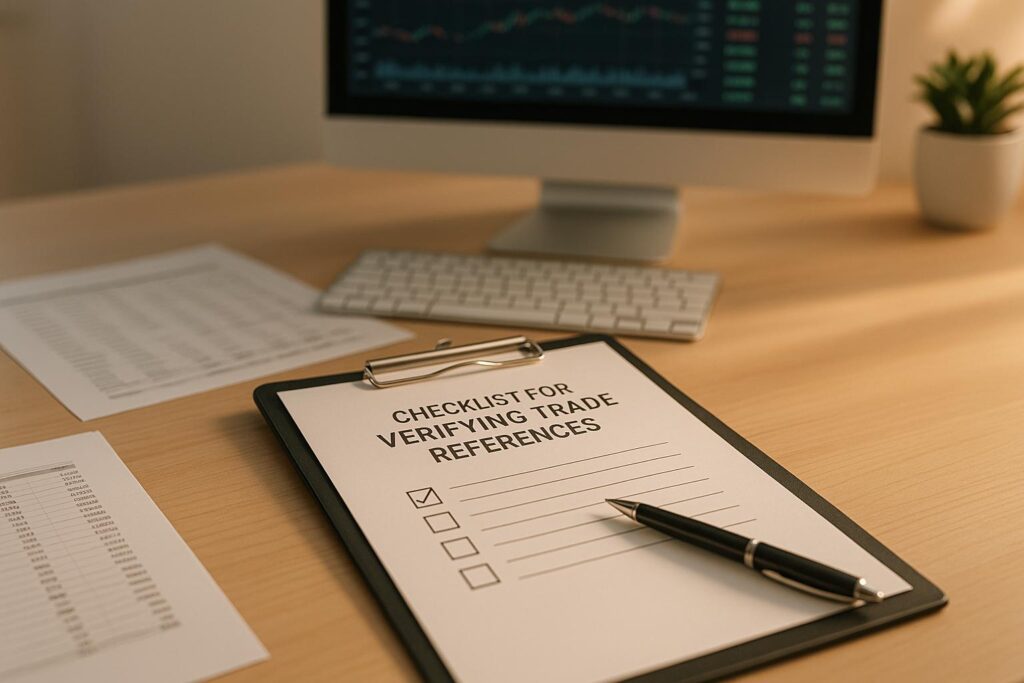
Verifying trade references is essential when offering credit to customers. It helps identify payment habits, financial reliability, and potential risks. With 41% of U.S. B2B invoices overdue in 2023, skipping this step can lead to late payments, cash flow issues, or even bad debt. Here’s what to focus on:
- Gather Key Information: Look at the business relationship’s duration, transaction frequency, credit limits, and payment history.
- Contact References Directly: Verify details by speaking with authorized contacts and asking specific questions about payment behavior.
- Request Multiple References: Use at least three to cross-check reliability and spot inconsistencies.
- Watch for Red Flags: Incomplete information, conflicts of interest, or poor payment history can signal risks.
- Document Everything: Maintain clear records of verification steps for compliance and future reference.
Taking these steps minimizes financial risks and strengthens credit decisions. Pairing this process with Accounts Receivable Insurance (ARI) offers added protection against non-payment or customer insolvency.
Get a Business Credit Boost With Trade References
Information to Collect from Trade References
When evaluating a customer’s creditworthiness, gathering detailed information from trade references is a crucial step. This data sheds light on their payment habits and overall reliability, forming the backbone of your credit decision-making process. Here’s what you should focus on:
Business Relationship Details
Begin by digging into the nature and duration of the relationship between the reference and your customer. Ask for specifics, like "since January 2021", instead of vague responses such as "a few years." This ensures the reference has enough experience with the customer to provide meaningful feedback.
Clarify the frequency of transactions – are they weekly, monthly, or sporadic? A supplier handling frequent orders will likely have a better grasp of the customer’s payment behavior than one with occasional dealings. Additionally, determine whether the reference is a primary or secondary supplier. Customers often prioritize payments to their key suppliers, which can provide insight into their financial priorities.
Another important detail is the highest credit amount extended. For instance, if a supplier has extended $25,000 in credit, it signals confidence in the customer’s ability to pay. Compare this figure to the credit limit you’re considering – it can guide your decision.
Don’t overlook the supplier’s location. Local suppliers often receive payment priority over those farther away, which can indicate how the customer manages their obligations.
Finally, complement these insights with a review of the customer’s historical payment performance to build a fuller picture.
Payment History
Dive into the customer’s payment habits. Ask if payments are typically made within agreed terms – like net 30 – or if there’s a pattern of delays, such as payments arriving 60+ days late. This can reveal whether late payments are an occasional hiccup or a recurring issue.
Inquire about any NSF (non-sufficient funds) incidents, as these can point to cash flow problems or poor financial management. Also, explore how the customer handles payment terms and discounts. Do they take advantage of early payment discounts responsibly, or do they misuse them by paying late but still claiming the discount?
Unresolved disputes or defaults require special attention. Document the details – dates, amounts, and outcomes. A pattern of unresolved issues could signal deeper financial or operational problems.
The date of the last sale is another useful detail. A recent and active relationship is more relevant than one that ended years ago.
These insights are essential for forming a well-rounded credit assessment.
Reason for Ending the Relationship (if applicable)
If the relationship between the reference and the customer has ended, understanding why is critical. Look for clear, factual reasons like a supplier switch due to pricing or a customer relocation outside the service area.
However, be wary of reasons like "repeated late payments" or "payment disputes", as these can indicate financial instability or problematic behavior. Similarly, if a reference is unwilling to explain or offers vague answers, it could be a red flag pointing to potential risks.
For businesses applying for Accounts Receivable Insurance, providers like ARI often require detailed trade reference information as part of their risk assessment process. Having thorough documentation of trade references can strengthen your application and help insurers determine the best coverage terms for your needs.
Collecting this information ensures you have a comprehensive view of your customer’s payment behavior, financial stability, and business practices. This foundation is key to making informed credit decisions and verifying the details provided.
Steps to Verify Trade References
After gathering information from trade references, the next step is making sure that data is accurate and trustworthy. This involves reaching out to the references directly and cross-checking the details provided.
Contact References Directly
Don’t just rely on the written references or contact details given by the customer – verify them independently. Start by reaching out to the reference via phone or email. Introduce yourself, explain the purpose of your call, and confirm that the person you’re speaking with is authorized to provide payment-related information. Make sure to verify key details like the company name, the contact’s role, and their authority within the organization.
Prepare specific questions to gain deeper insights, such as asking about the customer’s payment habits, any history of credit holds, or how long they’ve been working together. Be alert for warning signs like vague responses, hesitation to share details, or answers that seem overly rehearsed – they might indicate the reference isn’t entirely reliable.
Request Multiple References
For a more thorough assessment, it’s a good idea to request three to four trade references. This allows you to cross-check information and spot any inconsistencies in the customer’s payment behavior. When asking for references, focus on their primary suppliers – companies that provide essential materials or services. These suppliers are more likely to provide meaningful insights into the customer’s financial reliability.
By comparing feedback from multiple references, you can identify discrepancies that may need further investigation. For example, one company implemented a process requiring written authorization and multiple references, which resulted in an 18% reduction in late payments over six months.
Check for Industry-Related References
References from within the customer’s industry – or closely related sectors – can provide context-specific insights. These contacts are more familiar with industry norms, such as standard payment terms, seasonal trends, and credit practices. For instance, if you’re assessing a construction company, reach out to references within the construction sector to get a clearer picture of their payment habits and reliability.
Industry-specific references can also help you benchmark typical credit terms. For example, manufacturers might commonly offer 60-day payment terms, while retailers often stick to 30-day terms. These insights can guide you in setting appropriate credit limits and terms for your customer.
sbb-itb-2d170b0
Red Flags in Trade References
When reviewing and verifying trade references, it’s essential to stay alert for warning signs that could impact your credit decisions. Even with references in hand, not all information may be accurate or trustworthy. Spotting potential issues early can save you from making costly mistakes.
Unverifiable or Incomplete Information
If reference details are missing, incomplete, or impossible to verify, it’s a cause for concern. For instance, vague answers about account dates, payment terms, or transaction history should raise questions. Similarly, if you can’t reach a reference after multiple attempts using the contact details provided, it might indicate inaccuracies in the applicant’s information – or even suggest that the relationship isn’t genuine.
Reliable trade references should include clear specifics, like credit limits, current balances, dates of last sales, and straightforward payment ratings. Be sure to document your attempts to contact the reference. If you’re unable to verify the information after reasonable effort, it may be necessary to request additional references or explore other verification methods, such as consulting industry directories for alternative suppliers. Also, take a closer look at the relationships behind the references to identify any potential biases.
Related Parties or Conflicts of Interest
References from family members, business partners, or other connected parties can sometimes be skewed to present an overly favorable picture. These relationships – whether familial, business-related, or tied through shared ownership or overlapping management – lack independence and could even face scrutiny during insolvency proceedings.
When verifying references, ask directly about the nature of the relationship between the reference and the applicant. Questions like, “Are there any personal or business ties beyond the supplier arrangement?” can help uncover potential conflicts of interest. Pay attention to interconnected references, as they may indicate an effort to mask true payment behavior. To avoid these risks, request at least one reference from within the applicant’s specific industry and confirm that all references reflect genuine, independent business transactions.
Poor Payment History
A pattern of late payments is one of the clearest red flags. While occasional delays can sometimes be explained, consistent late payments often point to deeper cash flow problems. Particular attention should be paid to cases involving non-sufficient funds (NSF) checks. If these checks aren’t promptly replaced, it can signal serious financial instability. Be sure to ask whether NSF checks were eventually resolved and how long it took to address the issue.
Document any payment ratings, unresolved disputes, or instances of credit suspensions and account closures. Additionally, consider the role of the supplier providing the reference. Late payments to key vendors – those critical to the applicant’s operations – are typically more concerning than delays with secondary suppliers.
Compliance and Documentation Requirements
Ensuring compliance and maintaining proper documentation are key when verifying trade references. Adhering to U.S. regulations and keeping detailed records not only shields your business from legal risks but also demonstrates diligence during audits.
Follow Privacy and Credit Reporting Laws
The Fair Credit Reporting Act (FCRA) sets the rules for how businesses handle credit information, including trade references. Under this federal law, you must secure proper authorization before requesting or sharing trade reference data. Additionally, state-level privacy laws, such as the California Consumer Privacy Act (CCPA), may impose additional requirements depending on where your customers are located.
To stay compliant, make it a standard practice to obtain a signed authorization form from your customer during the credit application process. This form should explicitly allow you to contact and share information with trade references. Keep this document on file and reference it in all verification requests to ensure you’re meeting legal obligations.
Sensitive data must be stored securely – use encrypted systems with controlled access and conduct regular audits to identify any vulnerabilities. Failing to comply with these regulations can lead to legal penalties, fines, reputational damage, and strained business relationships.
Once legal requirements are addressed, focus on documenting every step of the verification process.
Document Verification Steps
Thorough documentation is your best defense in proving compliance and diligence. Keep detailed records of every verification step, including the date, method of contact, information received, and the identity of the reference.
For example, consider keeping a verification log to track all activities in chronological order. This log can be invaluable during audits or legal reviews. If a reference cannot be reached, document your attempts and request alternate references if necessary.
Additionally, retain copies of signed authorizations, completed verification forms, and any supporting documents. Establish clear retention policies that comply with legal standards – typically, records should be kept for several years after the end of the business relationship.
Using standardized digital tools can simplify and strengthen your documentation process.
Use Standardized Verification Tools
Standardized forms and digital tools can make the verification process more efficient while ensuring consistency and compliance. A well-designed verification form should include fields for customer and reference company details, authorization signatures, account open dates, credit limits, payment history, and additional comments. For example, the Precision Label Trade/Credit References Verification Authorization Form is a strong example of a format that meets compliance requirements by including all essential elements and requiring signatures from both parties.
Digital tools can significantly streamline this process. In 2023, a mid-sized manufacturing company in Ohio adopted a digital trade reference verification system that reduced their average processing time from 5 days to just 1.5 days. This system automated authorization requests and standardized forms, cutting compliance-related issues by 40%.
Automated credit risk assessment platforms can further reduce manual verification time by up to 70%, improving both compliance and documentation efficiency. These tools also provide secure storage, simplify retrieval during audits, and minimize errors, all while maintaining standardized workflows.
When choosing a verification tool, ensure it captures key data points such as company names, contact details, account open dates, credit limits, payment terms, payment history, and any special conditions. Integrating these tools with your existing credit management systems can create a seamless and comprehensive recordkeeping solution.
For businesses that use Accounts Receivable Insurance (ARI), proper compliance and documentation are even more critical. ARI providers often require detailed trade reference verifications as part of their risk assessments and claims processes. Maintaining accurate records is essential to ensure coverage eligibility and support claims effectively.
Conclusion: Improve Your Credit Assessment Process
A thorough trade reference verification process is the backbone of effective credit risk management. By gathering detailed information about business relationships and payment histories, and following a structured verification process, you lay the groundwork for making smarter credit decisions. This method allows you to spot potential warning signs early, reducing the risk of defaults and protecting your business from major financial setbacks.
This strategy not only reduces risk but also reinforces your company’s financial stability. Consider this: over 30% of business bankruptcies arise from poor credit management and inadequate due diligence. This highlights the importance of going beyond the basics. Requesting more than three references, reaching out to them directly with professional communication, and keeping thorough records can significantly lower your exposure to credit risks.
Regularly re-verifying even long-standing customers can uncover early signs of financial trouble, such as shifts in payment behavior. Catching these changes early helps you address potential issues before they disrupt your cash flow. By refreshing your verification practices, you also enhance the efficiency and reliability of your credit assessment system.
Leveraging digital verification tools and maintaining rigorous documentation ensures your process remains efficient and compliant with regulations. These tools can simplify your workflow while preserving accuracy and thoroughness.
Adding Accounts Receivable Insurance to your strategy provides an extra layer of protection. This insurance works alongside trade reference checks, offering proactive risk assessments and ongoing monitoring to shield your cash flow from unexpected disruptions.
"Trade credit insurance, also known as accounts receivable insurance, is a financial safety net that protects businesses from losses when their customers can’t pay their invoices. This could be due to bankruptcy, protracted default (non-payment over a certain period), or even political events impacting the buyer’s country." – AccountsReceivableInsurance.net
FAQs
Why should you verify trade references before offering credit to a customer?
Verifying trade references plays a key role in safeguarding your business from financial setbacks. It allows you to evaluate a customer’s payment habits, financial reliability, and overall creditworthiness, helping you feel more secure about extending credit.
A detailed review of trade references can help you steer clear of challenges like late payments or non-payment, both of which can disrupt your cash flow. This process becomes even more critical when offering substantial credit terms or starting new business relationships.
What are the key warning signs to watch for when reviewing trade references?
When assessing trade references, it’s important to be alert to inconsistent or vague details, such as incomplete contact information or unclear payment records. These gaps could suggest a lack of transparency or even raise concerns about the reference’s reliability.
Pay attention to any patterns of frequent late payments or past disputes with suppliers. These issues might point to financial troubles or questionable business practices. If the reference seems hesitant to share specific information or provides overly generic responses, that’s another red flag – it could mean the source isn’t entirely credible.
To ensure you’re making sound decisions about your trade partners, take these precautions seriously. For extra peace of mind, you might explore options like accounts receivable insurance, which helps protect your business from potential non-payment risks.
How can digital tools streamline and ensure compliance in the trade reference verification process?
Digital tools play a key role in streamlining the trade reference verification process. By automating repetitive tasks, they help minimize errors and ensure compliance with industry regulations. These tools can swiftly validate details, cross-check information against databases, and produce precise reports – all while saving valuable time and resources.
Many of these solutions also come with features like real-time updates, secure data storage, and customizable workflows. These capabilities not only help businesses maintain accurate and reliable records but also ensure they meet regulatory requirements. Incorporating such tools allows companies to operate more efficiently and dedicate more effort to fostering stronger trade relationships.