
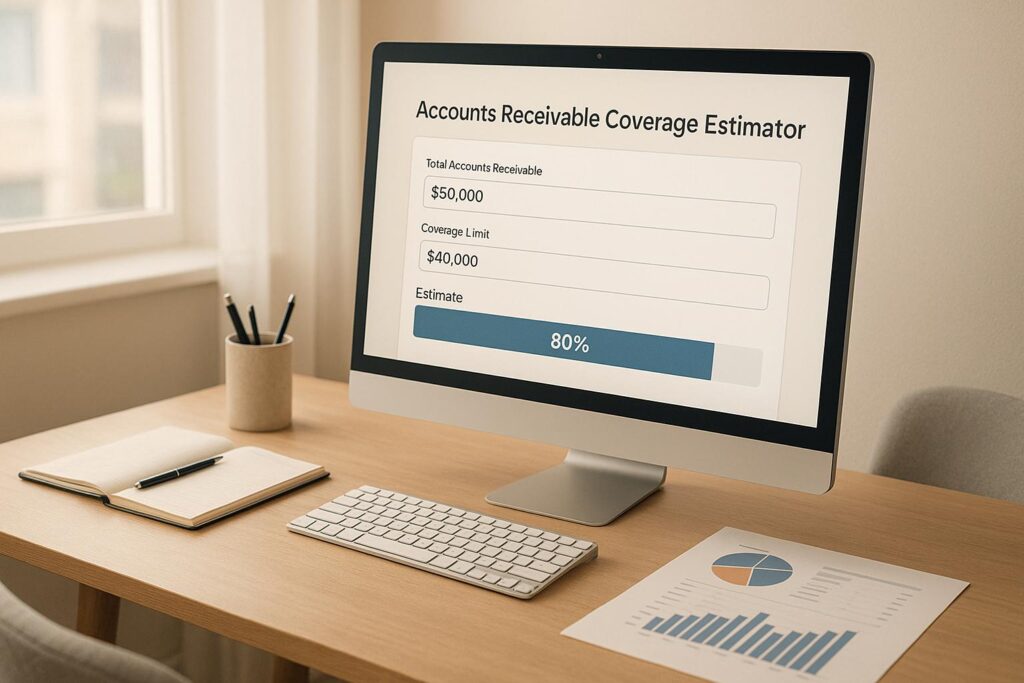
Understanding Accounts Receivable Insurance with Our Estimator
Running a business means juggling a lot of moving parts, and one of the trickiest is managing money owed to you. Unpaid invoices can create serious headaches, especially if a major client delays or defaults. That’s where protection for your receivables comes in—a way to shield your finances from unexpected shortfalls. Our free online tool helps you estimate the right level of coverage by analyzing key factors like your total outstanding payments, typical delays, and customer risk profiles.
Why Estimate Your Coverage Needs?
Every business faces unique challenges when it comes to getting paid on time. Maybe you’re in an industry with long payment cycles, or perhaps a chunk of your clients carry higher risk. Figuring out how much financial protection you need doesn’t have to be a guessing game. By using a tailored calculator for business risk coverage, you can get a clearer picture of potential gaps and plan accordingly. Beyond just numbers, this process offers peace of mind, letting you focus on growth instead of worrying about cash flow disruptions. Take a moment to input your data and see what level of safeguard makes sense for your operation.
FAQs
Why do I need insurance for accounts receivable?
Accounts receivable represent money owed to your business, and if clients don’t pay, it can hurt your cash flow big time. Insurance helps cover losses from unpaid invoices, especially if you’ve got high-risk customers or long payment delays. Think of it as a safety net—it’s there to keep your business steady when payments fall through.
How accurate is this coverage estimate?
Our tool gives you a solid starting point by factoring in your receivables, payment delays, customer risk, and industry trends. That said, it’s still an estimate. Every business is different, so we always recommend chatting with an insurer to get a precise quote tailored to your specific needs.
Does my industry really affect the coverage amount?
Absolutely, it does. Some industries, like manufacturing, often face higher risks due to larger contracts or economic swings, so the coverage estimate adjusts upward. Others, like retail, might have more predictable cash flows, leading to a different multiplier. Our tool accounts for these variations to give you a more relevant figure.